
Acquired by Databricks
Reordered around schemas,
built to survive what came next.
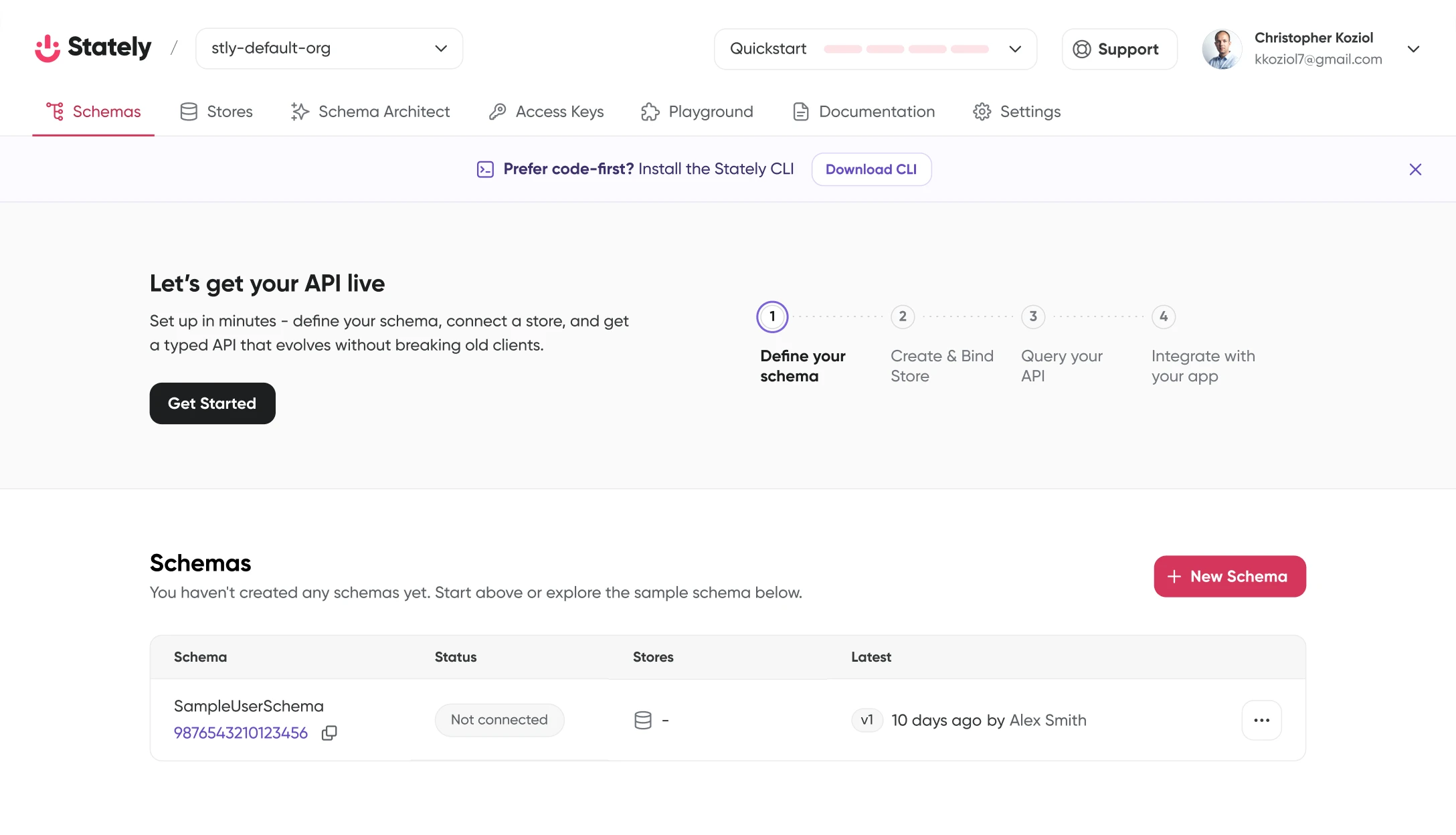
A schema-first database for backend developers. Its core model was powerful, but the console introduced it in the opposite order from how developers worked.
- Situation
- The console started with stores. Developers started with schemas.
- What I owned
- Sole design partner across product, brand, and web.
- What changed
- The console matched developers' mental model. One foundation carried product, brand, and web through three business shifts.
What was true before
The value lived in the schema. You define it, publish it, bind it to a store, and generate a strongly typed SDK from it. Powerful, and hard to hold in your head on first contact.
The console asked you to create a store first, then left you at a dead end: attaching a schema required the CLI.
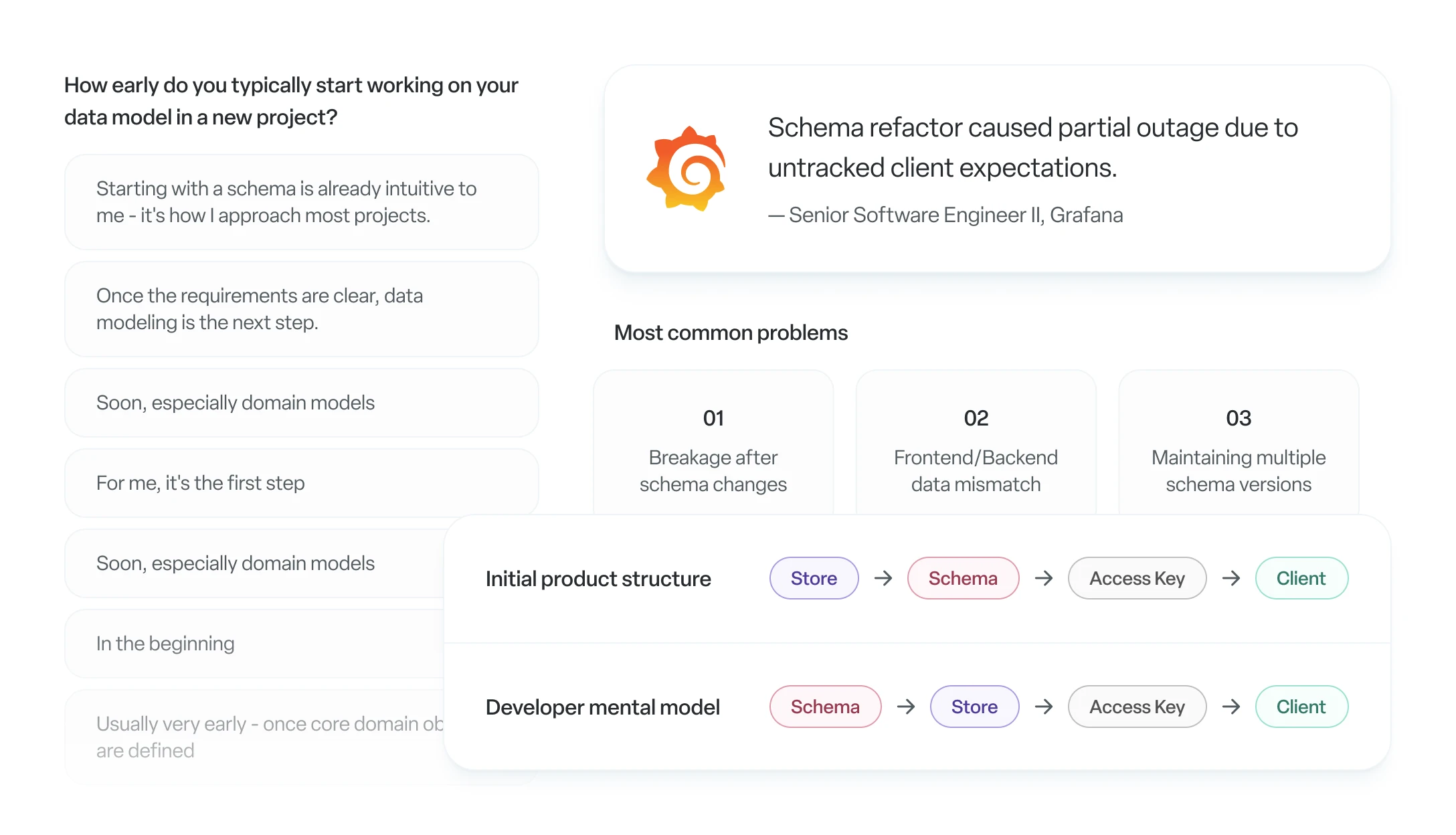
In directional interviews with seven senior and staff engineers, most described the opposite order: schema before store. The product’s structure was arguing with the way its users think.
Three decisions
01
Reordered the product entry point around how developers work: schema first, store second.
02
Created three first-schema paths: paste data, use guidance, or stay in the CLI.
03
Built one foundation across product, brand, and web that carried three shifts without a rebuild.
What it survived
The business moved through three distinct briefs: establishing credibility, creating differentiation, and clearing a CTO-level technical review. Each shift changed the expression. None required starting over.
Because the foundation carried across product, brand, and web, every transition simplified what already existed instead of replacing it. Three console iterations, three website generations, one system underneath. The story changed. The structure held.
In December 2025, Stately Cloud, the company behind StatelyDB, was acquired by Databricks.
What this means for you
If your product is hard to explain, the problem is usually not the words. It is the order the product puts things in, and no amount of copywriting fixes that.
When the cause is unclear,
start with first look.
When one area needs to move,
run a Product Sprint.
When the product keeps changing,
bring in a Design Partner.
